Inicio > Humanidades > Historia > Historia regional y nacional > Historia de África > The Enduring Relevance of Walter Rodney’s How Europe Underdeveloped Africa
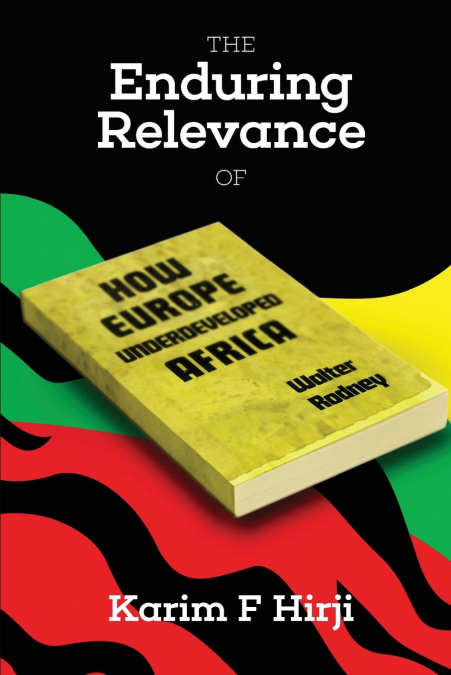
The Enduring Relevance of Walter Rodney’s How Europe Underdeveloped Africa

The Enduring Relevance of Walter Rodney’s How Europe Underdeveloped Africa

The Enduring Relevance of Walter Rodney's How Europe Underdeveloped Africa

Karim F Hirji

8,69 €
IVA incluido
Disponible
Editorial:
Daraja Press
Año de edición:
2017
Materia
Historia de África
ISBN:
9780995222397
Encuadernación:
Otros
8,69 €
IVA incluido
Disponible
Añadir a favoritos

Soon after its publication in 1972, Walter Rodney’s How Europe Underdeveloped Africa (HEUA) gained global popularity among progressive students, scholars and activists, and people concerned with African affairs. His innovative application of the method of political economy was a prime contributor to shifting the paradigm for rendition of the continent’s past as well as for visualizing its possible trajectory. Because it stridently took the traditional historians of Africa and the prevailing neo-colonial order to task, it was also vociferously criticized by the defenders of the status quo. In these neoliberal times, its visibility has waned. Mainstream scholars and pundits from and outside of Africa proclaim that it is no longer a relevant work for Africa. In The Enduring Relevance of Walter Rodney's How Europe Underdeveloped Africa, Karim F Hirji makes a systematic case that, on the contrary, Rodney’s seminal work retains its singular value for understanding where Africa has come from, where it is going, and charting a path towards genuine development for the people of Africa. Hirji considers Rodney in his unitary persona as a historian, theoretician and activist. He begins by outlining the publication history and contents of HEUA, and noting the comments it has drawn from varied quarters. This is followed by a depiction of the global context within which it saw the light of the day and the flowering of progressive thought and vision in those vibrant times. The retrogressive reversal, in thought and social reality, that has transpired since then is summed up next. An assessment of how HEUA has weathered this storm is also provided. The next chapter presents a brief portrait of Rodney as a revolutionary, with the focus on his seven years at the University of Dar es Salaam. This is followed by an overview of the methodological framework utilized in HEUA.These five chapters lay the foundation for the main substantive part of Hirji’s book. This part begins with a detailed evaluation of the criticisms that have been levelled at HEUA. Subsequently, by a review of eight textbooks of general African history in common use today is provided. The aim here is to assess the persistence, if any, of ideas of the type promoted by Rodney in such books and identify the manner in which HEUA is directly depicted therein. Do these books give an adequate and fair depiction of Rodney to modern day students?The penultimate chapter argues for the continued relevance of Rodney and his seminal text for Africa (and the world) in this anti-people, pro-capital, pro-imperial neoliberal era. Hirji concludes with a lively account of his own interactions over six years with Walter Rodney. With the focus on the issue of building socialism in Tanzania, a key dimension in the evolution of Rodney’s thinking is described in a critical spirit. The fundamental question addressed is, in our often dark, demoralizing political environment, what do Rodney and his life have to teach us on the matter of navigating between hope and struggle?The conclusion emerging from this book is that in the first place most of the criticisms of the content, style and practical value of HEUA lack merit. The representation of Rodney in mainstream books is as well replete with distortions, unfair selectivity and political bias.Hirji’s succinct work is a consistent, coherent defence of an intellectual giant, an astute historian and a compassionate revolutionary who lived and died for humanity. It is an essential read for anyone with an interest in African history, and the fate of Africa and the regions that are historically related to it.
Artículos relacionados

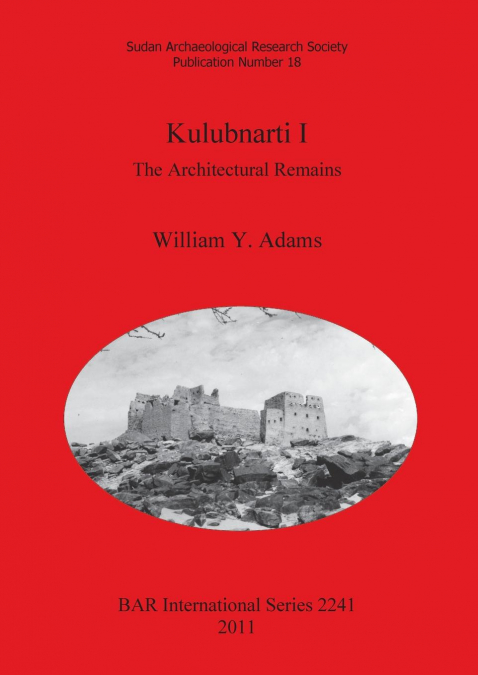
  • Kulubnarti I
    William Y. Adams / William YAdams
    Sudan Archaeological Research Society. Publication Number 18In 1998 and 1999 volumes II and III of the reports on the University of Kentucky excavations at Kulubnarti were published by the Sudan Archaeological Research Society as numbers 2 and 4 in its monograph series. Kulubnarti III was also available through British Archaeological Reports in its International Series no. 814....
    Disponible

    104,23 €

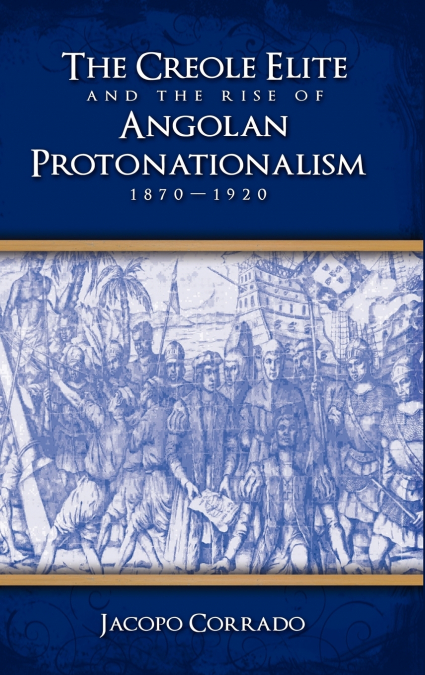
  • The Creole Elite and the Rise of Angolan Protonationalism
    Jacopo Corrado
    This book is about Angolan literature and culture. It investigates a segment of Angolan history and literature, with which even Portuguese-speaking readers are generally not familiar. Its main purpose is to define the features and the literary production of the so-called ’creole elite’, as well as its contribution to the early manifestations of dissatisfaction towards colonial ...
    Disponible

    124,04 €

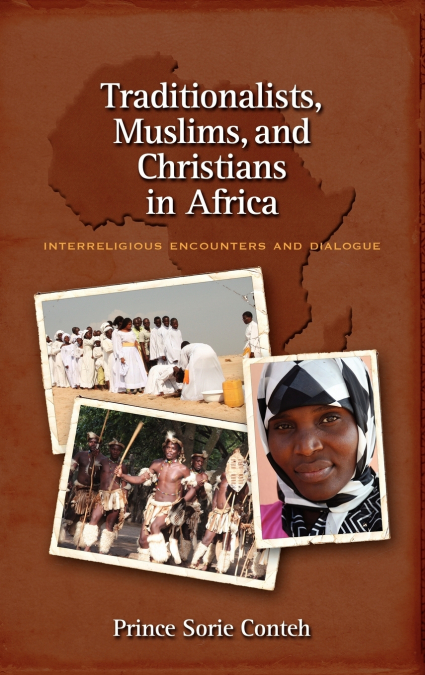
  • Traditionalists, Muslims, and Christians in Africa
    Prince Sorie Conteh
    As is the case for most of sub-Saharan Africa, African Traditional Religion (ATR) is the indigenous religion of Sierra Leone. When the early forebears and later progenitors of Islam and Christianity arrived, they met Sierra Leone indigenes with a remarkable knowledge of God and a structured religious system. Successive Muslim clerics, traders, and missionaries were respectful o...
    Disponible

    118,72 €

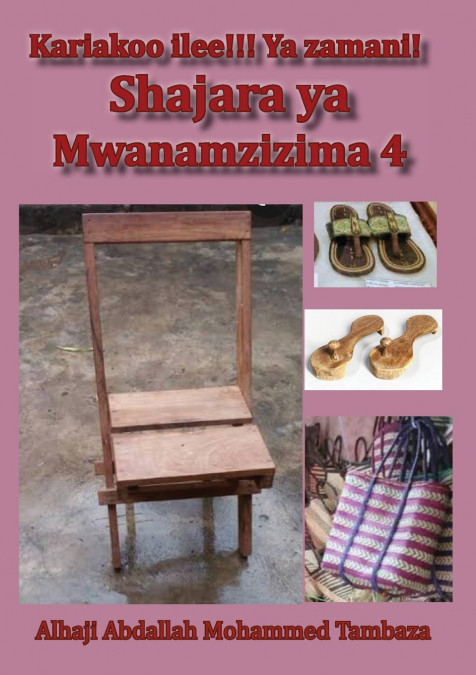
  • Shajara ya Mwana Mzizima 4
    Alhaji Abdallah Mohammed Tambaza
    This is the fourth part in the series of the history of Dar es salaam. This book is about Kariakoo, the first area where Africans were allowed to live and stay. It traces the history of the area before independence and up till the 1970’s.Kitabu hiki ni mfululizo wa vitabu vya kumbukumbu ya sehemu na watu mashuhuri katika jiji la Dar es Salaam. Kitabu hiki ni cha tatu ambacho ki...
    Disponible

    41,51 €

  • Britain, the Royal Air Force and relief flights to Biafra, 1968-1969
    Onianwa Oluchukwu Ignatus
    In this intriguing new book, Onianwa Oluchukwu Ignatus investigates Britain’s decision to engage the Royal Air Force (RAF) in the relief operations during the Nigerian Civil War. The main area badly ravaged by the conflict being the Republic of Biafra was declared 'a frontier of need.' Humanitarian concerns and mounting public pressures, both in Britain and other Western countr...
    Disponible

    202,72 €

  • We Rest Here Content
    Robin Smith
    We Rest Here Content is not the history of the Imperial Light Horse Regiment - that was written by the regiment’s Intelligence Officer, Lieutenant George Fleming Gibson and published in 1937 as The Story of the Imperial Light Horse in the South African War 1899-1902. We Rest Here Content approaches the subject of the I.L.H. from a different viewpoint. It looks at all the known ...
    Disponible

    73,70 €

Otros libros del autor

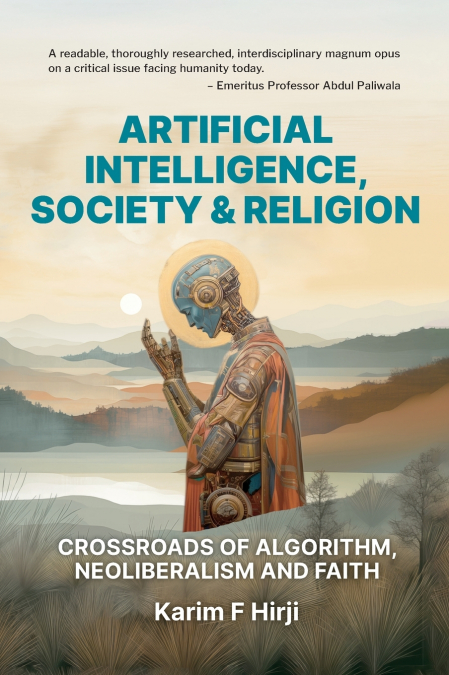
  • Artificial Intelligence, Society and Religion
    Karim F Hirji
    ...
    Disponible

    49,07 €

  • Religion, eugenics, science and mathematics
    Karim F Hirji
    Religion, Eugenics, Science and Mathematics by Karim F Hirji examines the dynamic relationship between religion, on the one hand, and science and mathematics, on the other, on historical and conceptual grounds. It focuses on Hinduism, Buddhism, Christianity, Islam, and various shades of secularism, including Marxism. Where relevant, other faiths are integrated into the analysis...
    Disponible

    40,14 €

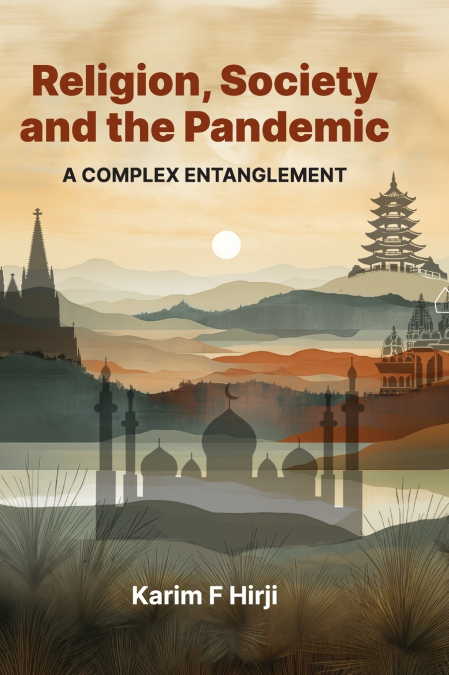
  • Religion, Society and the Pandemic
    Karim F Hirji
    The key lessons we drew in the two earlier books in this series, Religion, Politics and Society (RPS 2022) and Religion, Eugenics, Science and Mathematics (RESM 2023), were: Historically, religions have supported and opposed injustice. No religion is more holy than any other. Conflict between religions is driven more by social, political and economic factors than scriptural dif...
    Disponible

    39,94 €

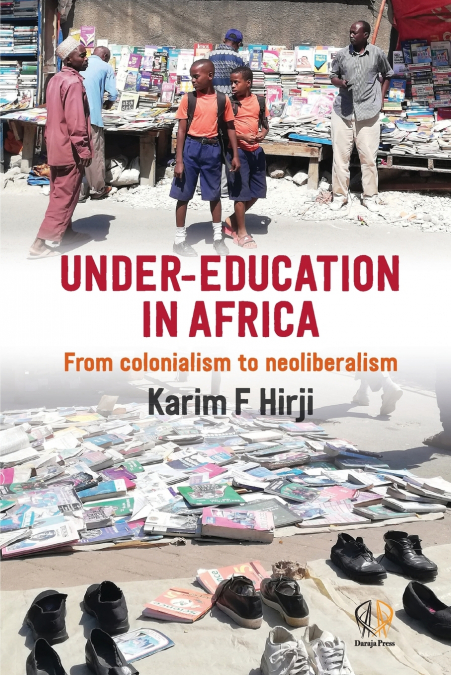
  • Under-Education in Africa
    Karim F Hirji
    Under-Education in Africa: From Colonialism to Neoliberalisma collection of edited essays on diverse aspects of educational systems that were written over a period of four and a half decades. With the focus on Tanzania, they cover education in the German colonial era, the days of Ujamaa socialism and the present neo-liberal times. Their themes include social function of educati...
    Disponible

    14,18 €

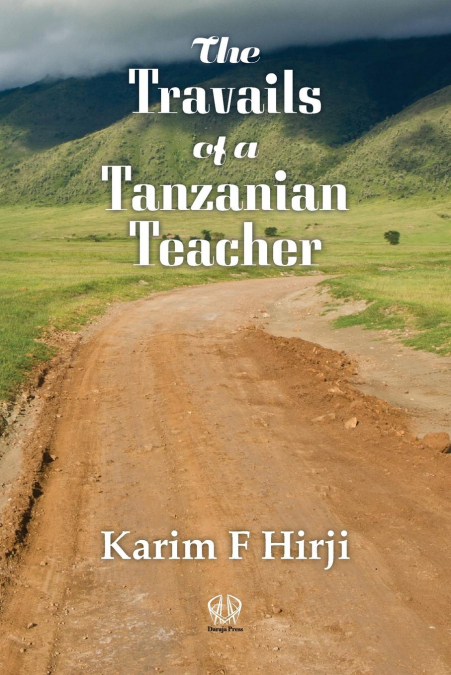
  • The Travails of a Tanzanian Teacher
    Karim F Hirji
    The Travails of a Tanzanian Teacher is a riveting account of the bumpy first decade of the work life of Karim F Hirji, a retired Professor of Medical Statistics. Filled with a distinctive variety of eye-opening episodes, it covers lecturing at the University of Dar es Salaam, the life of a political exile in a remote rural area and the challenges of setting up from scratch a on...
    Disponible

    15,79 €