Religion, Society and the Pandemic

Religion, Society and the Pandemic

Karim F Hirji

39,94 €
IVA incluido
Disponible
Editorial:
Daraja Press
Año de edición:
2024
ISBN:
9781990263958
39,94 €
IVA incluido
Disponible
Añadir a favoritos

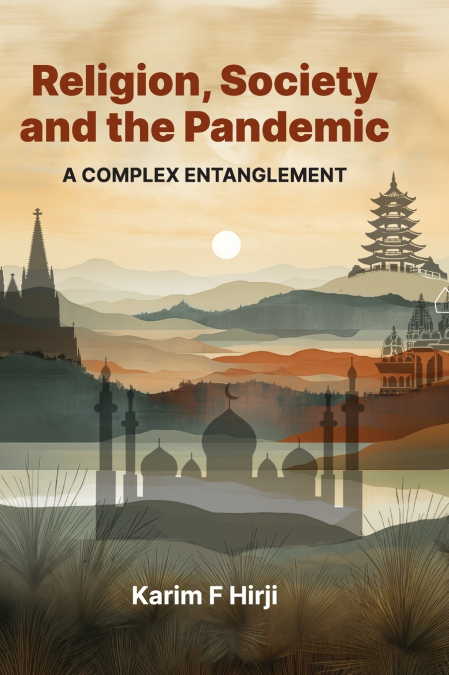
The key lessons we drew in the two earlier books in this series, Religion, Politics and Society (RPS 2022) and Religion, Eugenics, Science and Mathematics (RESM 2023), were: Historically, religions have supported and opposed injustice. No religion is more holy than any other. Conflict between religions is driven more by social, political and economic factors than scriptural differences. Morality can exist without religious belief, but science or secularism does not guarantee morality. The basic philosophy and approach of religion and science differ, yet they need not be socially antagonistic forces. Religion and secularism can coexist peacefully. Religions, secularism, and science can cooperate to counter the damage wrought on our planet by profit- driven neoliberal capitalism and hyper-consumerism. RPS (2022) also presents a schema to promote joint, morally ennobling engagement between the varied faith traditions and between religions and secular forces. Its tenets are:Declaration of spiritual equality, demarcation of common ethical principles, separation of religion and state, demarcation of the roles of religion and science in education, freedom of dress, fostering principled tolerance, acceptance of faith-based conversions, promotion of gender equality, non-discrimination over sexual preference, and regular joint celebrations and interfaith prayers. (RPS 2022).These tenets were augmented in RESM (2023) by asserting the fundamental right of religions and science to exist and freely propagate themselves. Yet, at the same time, I suggested that scientists should be free to criticize religion and that people of faith should be free to criticize science. Religion should not intrude into public policy and education. Scientific and Aa. People of science, religion, and secularism should abide by the highest standards of morality to promote human flourishing and planetary welfare. Only the combined force of common people, religious and secular, stretching across nations and firmly committed to social and economic justice, promises the hope of attaining a humane, tolerant social order. (RESM 2023). The coronavirus pandemic dramatically transformed people-to-people interactions in families, communities, work, and educational places. Public social gatherings were curtailed, relatives did not visit one another, teachers kept a distance from their students, classes were held online, employees worked from home, recreational travel plummeted, supermarkets opened on a restricted entry basis, and so on. Washing hands, social distancing, and mask-wearing became the norm in public venues. International relationships and religious practices were affected drastically as well.The main objective of this book is to examine how religions and people of faith were affected by the coronavirus pandemic and how their reactions altered its course. We also assess the validity of the above-noted conclusions drawn in RPS (2022) and RESM (2023) for the coronavirus pandemic. In particular, we ponder on the following queries:Question 1: How did the coronavirus pandemic evolve in selected nations? Question 2: Was religious belief an obstacle or a positive factor in understanding the scientific basis of the coronavirus pandemic? Question 3: Did religious institutions, leaders and laity facilitate or block the implementation of the official pandemic control measures? Question 4:Was the role played by religion in the coronavirus pandemic affected by historical, social, economic, and political factors? Question 5: How did secularism operate in the coronavirus pandemic? Question 6: Did the coronavirus pandemic enhance or undermine religiosity? We explore these queries in relation to the four major faiths (Christianity, Islam, Hinduism, Buddhism), some minor religions, and secularism.

Artículos relacionados

  • The Fundamentals of Extremism
    Ed Buckner / Herb Silverman
    On September 11, 2001, Americans witnessed horrific carnage inspired by religious extremism. We saw religious fundamentalists will stop at nothing to reign terror on those they regard as their enemies.  In our response, we began to focus on the oppressive treatment of women and children in other parts of the world where religious fundamentalism rules. But we failed to acknowled...
    Disponible

    11,68 €

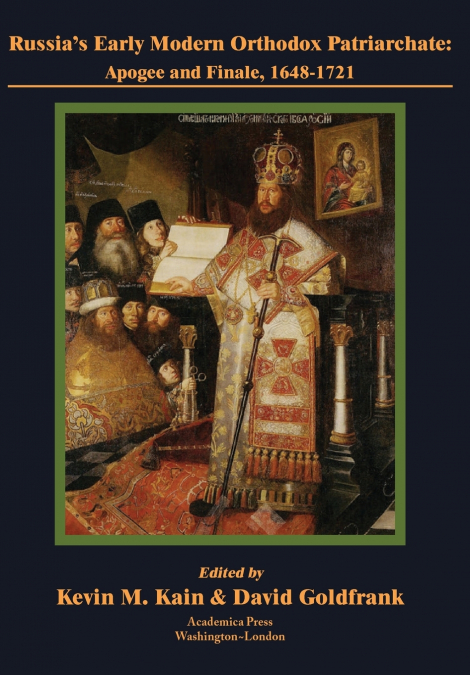
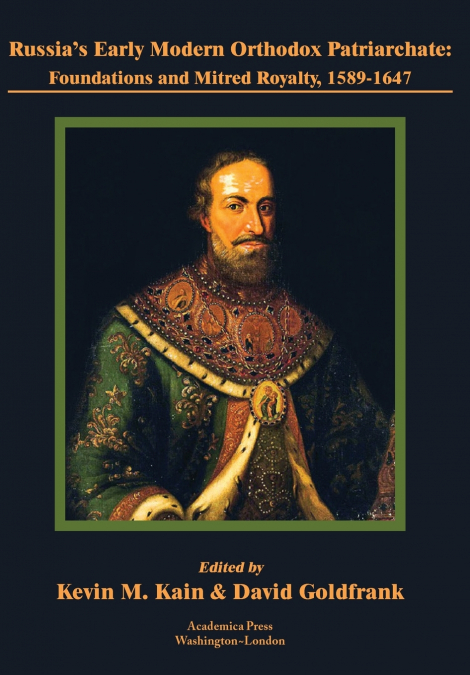
  • Russia’s early modern orthodox patriarchate
    David Goldfrank / Kevin M Kain
    Focusing on one of Russia’s most powerful and wide-reaching institutions in a period of shattering dynastic crisis and immense territorial and administrative expansion, this book addresses manifestations of religious thought, practice, and artifacts revealing the permeability of political boundaries and fluid transfers of ideas, texts, people, objects, and 'sacred spaces' with ...
    Disponible

    199,25 €

  • Russia’s early modern orthodox patriarchate
    David Goldfrank / Kevin M Kain
    Patriarch Nikon, the most energetic, creative, influential, and obstinate of Russia’s early religious leaders, dominates this book. As Patriarch of the Russian Orthodox Church, Nikon’s most important initiative was to bring Russian religious rituals into line with Greek Orthodox tradition, from which Russia’s practices had diverted. Kiev’s Monastery of the Caves served as a med...
    Disponible

    199,22 €

  • Peter’s Burn
    K.C. McCraw
    The story takes place in an imaginary city, Malfaxe, located near the east coast of Maryland. Although it concerns several dynamic personalities, it revolves mainly around Emmitt Braedeikk, an egotistical bank manager and bachelor who is persuaded to run for mayor.Comparatively speaking, the idea of Emmitt being a banker is of trivial importance. Both bizarre and sometimes humo...
    Disponible

    16,10 €

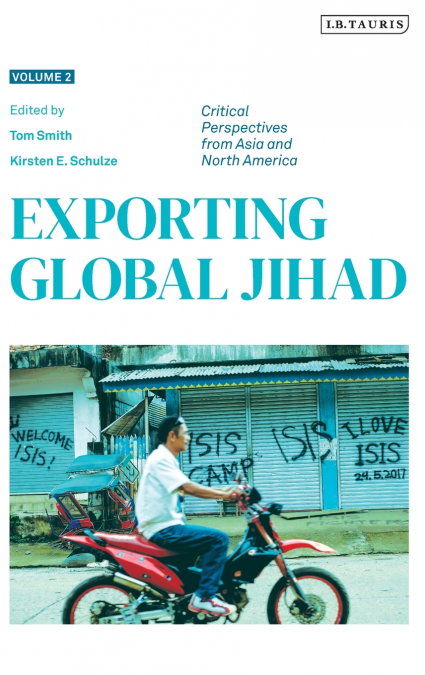
  • Exporting Global Jihad
    This timely 2 volume edited collection looks at the extent and nature of global jihad, focusing on the often-exoticised hinterlands of jihad beyond the traditionally viewed Middle Eastern ’centre’. As ISIS loses its footing in Syria and Iraq and al-Qaeda regroups, this comprehensive account will be a key work in the on-going battle to better understand the dynamics of jihad’s g...
    Disponible

    141,39 €

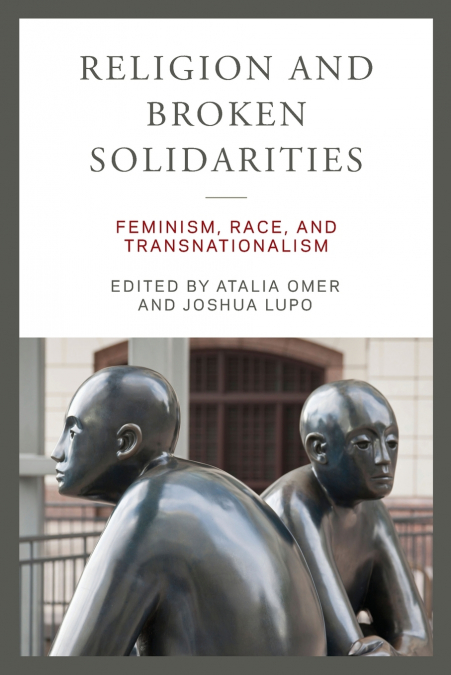
  • Religion and Broken Solidarities
    The contributors to this original volume provide a new and nuanced approach to studying how discourses of religion shape public domains in sites of political contestation and 'broken solidarities.'Our public discourse is saturated with intractable debates about religion, race, gender, and nationalism. Examples range from Muslim women and headscarves to Palestine/Israel and to g...
    Disponible

    50,23 €

Otros libros del autor

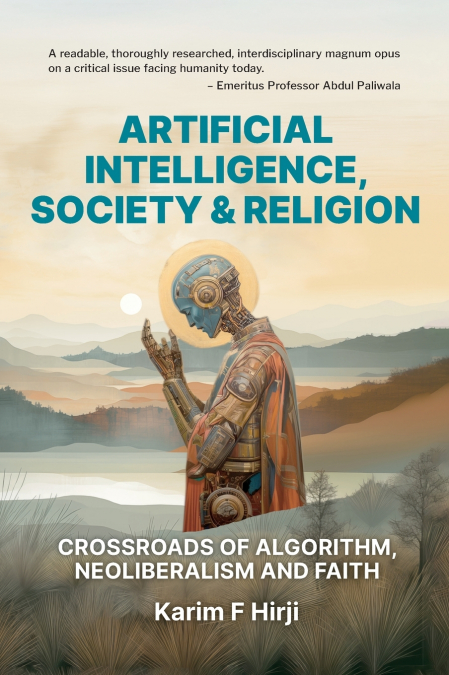
  • Artificial Intelligence, Society and Religion
    Karim F Hirji
    ...
    Disponible

    49,07 €

  • Religion, eugenics, science and mathematics
    Karim F Hirji
    Religion, Eugenics, Science and Mathematics by Karim F Hirji examines the dynamic relationship between religion, on the one hand, and science and mathematics, on the other, on historical and conceptual grounds. It focuses on Hinduism, Buddhism, Christianity, Islam, and various shades of secularism, including Marxism. Where relevant, other faiths are integrated into the analysis...
    Disponible

    40,14 €

  • Under-Education in Africa
    Karim F Hirji
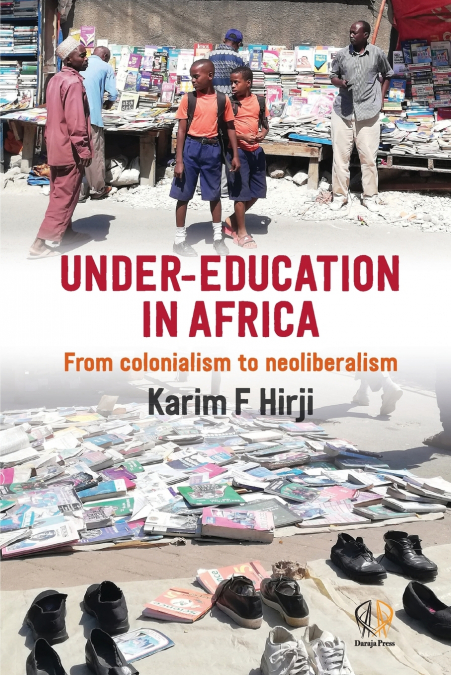
    Under-Education in Africa: From Colonialism to Neoliberalisma collection of edited essays on diverse aspects of educational systems that were written over a period of four and a half decades. With the focus on Tanzania, they cover education in the German colonial era, the days of Ujamaa socialism and the present neo-liberal times. Their themes include social function of educati...
    Disponible

    14,18 €

  • The Travails of a Tanzanian Teacher
    Karim F Hirji
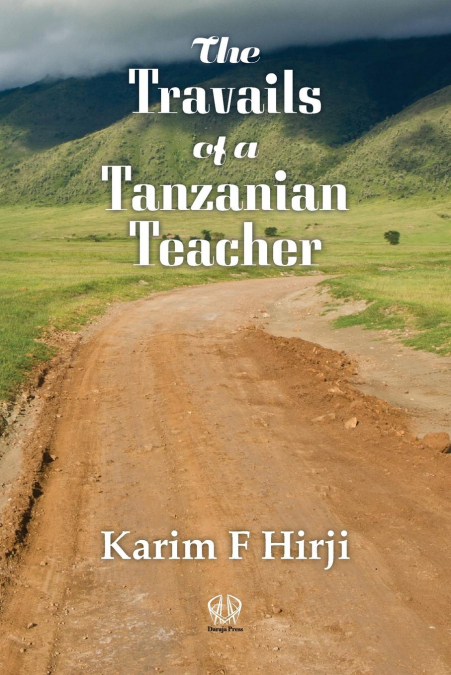
    The Travails of a Tanzanian Teacher is a riveting account of the bumpy first decade of the work life of Karim F Hirji, a retired Professor of Medical Statistics. Filled with a distinctive variety of eye-opening episodes, it covers lecturing at the University of Dar es Salaam, the life of a political exile in a remote rural area and the challenges of setting up from scratch a on...
    Disponible

    15,79 €

  • The Enduring Relevance of Walter Rodney’s How Europe Underdeveloped Africa
    Karim F Hirji
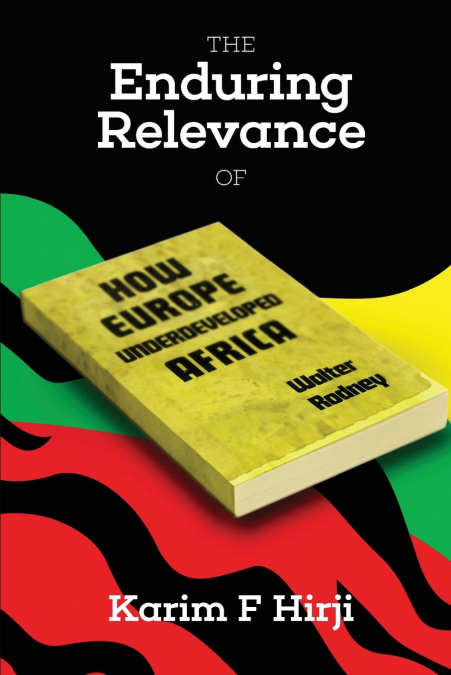
    Soon after its publication in 1972, Walter Rodney’s How Europe Underdeveloped Africa (HEUA) gained global popularity among progressive students, scholars and activists, and people concerned with African affairs. His innovative application of the method of political economy was a prime contributor to shifting the paradigm for rendition of the continent’s past as well as for visu...
    Disponible

    8,69 €