Spain. Cortes / SpainCortes
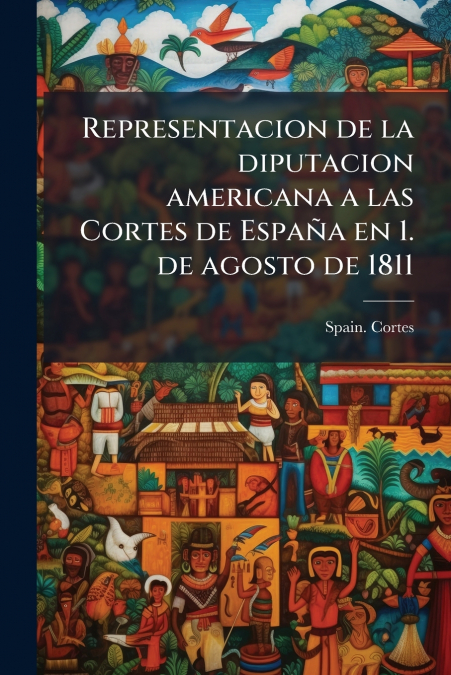
Representacion de la diputacion americana a las Cortes de España en 1. de agosto de 1811 offers a crucial glimpse into the political dynamics between Spain and its American colonies during the early 19th century. This historical document captures the discourse surrounding the representation of American deputies in the Spanish Cortes, specifically focusing on arguments presented on August 1, 1811. As Spain grappled with internal turmoil and the Napoleonic Wars, the question of colonial representation became a central issue. This publication sheds light on the complex negotiations and debates concerning the rights and status of Spain’s overseas territories. It provides invaluable insights into the evolving relationship between the metropolis and its colonies, a relationship that would ultimately shape the future of both Spain and Latin America. Students of history, political science, and constitutional law will find this work essential for understanding the roots of Latin American independence movements and the challenges of colonial governance during a period of profound global transformation.This work has been selected by scholars as being culturally important, and is part of the knowledge base of civilization as we know it. This work was reproduced from the original artifact, and remains as true to the original work as possible. Therefore, you will see the original copyright references, library stamps (as most of these works have been housed in our most important libraries around the world), and other notations in the work.This work is in the public domain in the United States of America, and possibly other nations. Within the United States, you may freely copy and distribute this work, as no entity (individual or corporate) has a copyright on the body of the work.As a reproduction of a historical artifact, this work may contain missing or blurred pages, poor pictures, errant marks, etc. Scholars believe, and we concur, that this work is important enough to be preserved, reproduced, and made generally available to the public. We appreciate your support of the preservation process, and thank you for being an important part of keeping this knowledge alive and relevant.