On Taking Offence

On Taking Offence

Emily McTernan

47,42 €
IVA incluido
Disponible
Editorial:
Oxford University Press
Año de edición:
2023
Materia
Filosofía social y política
ISBN:
9780197613108
47,42 €
IVA incluido
Disponible
Añadir a favoritos

Someone fails to shake your outstretched hand, puts you down in front of others, or makes a joke in poor taste. Should we take offence? Wouldn’t it be better if we didn’t? In the face of popular criticism of people taking offence too easily, and the social problems that creates, Emily McTernan defends taking offence as often morally appropriate and socially valuable. Within societies marred by inequality, taking offence can resist the day-to-day patterning of social hierarchies. This book defends the significance of details of our social interactions. Cumulatively, small acts, and the social norms underlying these, can express and reinforce social hierarchies. But by taking offence, we mark an act as an affront to our social standing. We also often communicate our rejection of that affront to others. At times, taking offence can be a way to renegotiate the shared social norms around what counts as respectful treatment. Rather than a mere expression of hurt feelings then, to take offence can be to stand up for one’s standing. When taken by those deemed to have less social standing, to take offence can be a direct act of insubordination against a social hierarchy. Taking offence can resist everyday inequalities. In unequal societies, the inclination to take offence at the right things, and to the right degree, may even be a civic virtue. These right things at which to take offence include many of the very instances that the opponents of a culture of taking offence find most objectionable: apparently trivial and small-scale details of our social interactions.

Artículos relacionados

  • How Science Can Help Us Live In Peace
    Markolf H Niemz / James D Dunn
    Award-winning biophysicist Markolf H. Niemz puts into a nutshell what the top 3 scientists on earth have discovered. Charles Darwin: Animal and man are not two. Albert Einstein: Space and time are not two. Alfred N. Whitehead: The world and I are not two. The world we live in is non-dualistic. Nature is crying for peace, but we shut off foreign from native, poor from rich, othe...
    Disponible

    40,00 €

  • Sir George Tressady Vol.-II
    Mrs. Humphry Ward
    ' Sir George Tressady Vol. II' by Mrs. Humphry Ward is a unique that delves into the difficult social and political landscape of overdue nineteenth-century England. Mary Augusta Ward, writing beneath the pseudonym Mrs. Humphry Ward, become a prolific British creator known for her insightful portrayals of cutting-edge society. The narrative revolves across the imperative charact...
    Disponible

    15,20 €

  • Sir George Tressady Vol.-I
    Mrs. Humphry Ward
    'Sir George Tressady Vol. I' by Mrs. Humphry Ward is a unique that delves into the difficult social and political landscape of overdue nineteenth-century England. Mary Augusta Ward, writing beneath the pseudonym Mrs. Humphry Ward, become a prolific British creator known for her insightful portrayals of cutting-edge society. The narrative revolves across the imperative character...
    Disponible

    14,46 €

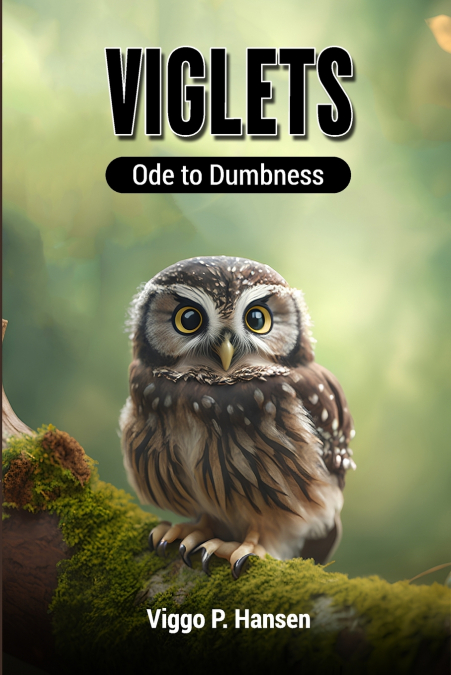
  • VIGLETS
    Viggo Hansen
    'VIGLETS Two - Ode to Dumbness' seeks to ease widespread global tensions resulting from dumb people, which includes everyone - and is seemingly increasing exponentially. The author gently guides readers into creating personal dumb Viglets - intimate odes, totally unrestricted by archaic rules of grammar - you simply let your emotions on dumbness 'hang out' and get instant relie...
    Disponible

    13,06 €

  • Crítica de la sociedad adultocéntrica
    Pedro Bravo Jorge Vásquez
    Crítica de la sociedad adultocéntrica constituye una reflexión sobre el carácter adultocéntrico de la sociedad contemporánea, por medio de la discusión con diversos autores importantes en el debate académico actual replantea perspectivas teóricas claves en la fundamentación de las subjetividades modernas. Para conseguir esto, el libro articula el análisis social recurriendo a l...
    Disponible

    21,32 €

  • Aristóteles, el juez y la equidad
    Eduardo Esteban Magoja / Eduardo Esteban Magoja
    La teoría de la equidad (epieíkeia) de Aristóteles es ese tipo de ideas que atraviesa la historia del pensamiento jurídico y que tiene una indudable incidencia en el quehacer interpretativo judicial. Sin embargo, es susceptible de diversas interpretaciones, resemantizaciones y apropiaciones, incluso por parte de cosmovisiones opuestas. En términos generales, se pueden identific...
    Disponible

    14,04 €