Inicio > Economía, finanzas, empresa y gestión > Economía > Economía internacional > Economic Sanctions as an Instrument of U.S. Foreign Policy
Economic Sanctions as an Instrument of U.S. Foreign Policy

Economic Sanctions as an Instrument of U.S. Foreign Policy

Economic Sanctions as an Instrument of U.S. Foreign Policy

Helen Osieja

26,70 €
IVA incluido
Disponible
Editorial:
Dissertation.Com.
Año de edición:
2006
Materia
Economía internacional
ISBN:
9781581123142
26,70 €
IVA incluido
Disponible
Añadir a favoritos

Economic sanctions have been used as an instrument of American foreign policy ever since the Taft administration adopted the Dollar Diplomacy. This dissertation analyzes the trade Embargo the United States imposed upon Cuba after the Revolution from different perspectives: from the political, considering the main guidelines of American foreign policy toward Latin America, especially during the Cold War, and from the juridical, considering different perspectives of customary international law. Since the embargo was imposed only after American property had been expropriated without compensation, the dissertation analyzes the legality of expropriation, seen from the perspective of both capital-importing and capital-exporting countries, and the legality of economic sanctions as a legitimate peaceful reprisal. Due to the fact that the American embargo against Cuba is quasi-total, that is, consists of a number of different economic sanctions, it is the aim of this dissertation to analyze each of these, and finally, to assess the effectiveness of economic sanctions as an instrument of foreign policy. Many books and articles have been written about this very controversial embargo, almost as old as the Cuban Revolution itself. For the Cubans, it constitutes and 'economic blockade', and a violation of Cuba's right to free trade; for the Americans, it is a reprisal for the confiscation of American property. Nonetheless, since the embargo, as stated above, is not a sanction itself but a number of different economic sanctions, it is the aim of this dissertation to analyze each of the sanctions that comprise the embargo and its legality, according to customary international law. Another aim of this dissertation is to prove why the American embargo against Cuba has only enhanced Castro's power and further centralized it. A brief chapter about the economic sanctions the United States imposed upon Chile under President Salvador Allende and the fall of his regime serves to compare the two cases with some similarities where sanctions were applied- in the first without success and in the second with success. Finally, the dissertation aims to prove that a lifting of the American embargo against Cuba is highly unlikely unless there is a change of regime in that nation of the Caribbean.

Artículos relacionados

  • The UN and Global Political Economy
    John Toye / Richard Toye
    ...
  • Regional Economic Integration and the Global Financial System
    Engin Sorhun / Hasan Dinçer / Unit Hacioglu
    In theory, regionalism and globalization are intended to be viewed as two separate concepts. However, as long as the approaches complement each other, considering these paradigms in tandem can have significantly positive effects on the overall status of the world economy. Regional Economic Integration and the Global Financial System addresses recent trends in regional integrati...
    Disponible

    262,55 €

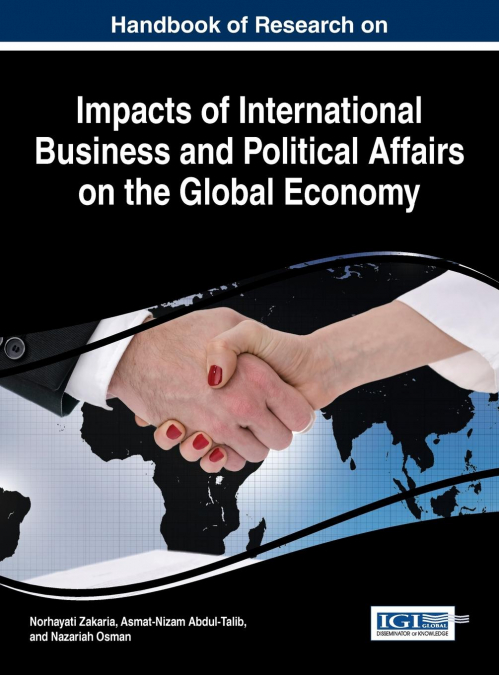
  • Handbook of Research on Impacts of International Business and Political Affairs on the Global Economy
    The growth of global commerce depends on many different factors and strategies in order for multinational corporations to efficiently compete and thrive in the international marketplace. In addition to business strategies, corporations must also be aware of political affairs that may impact their global economic status. The Handbook of Research on Impacts of International Busin...
    Disponible

    308,60 €

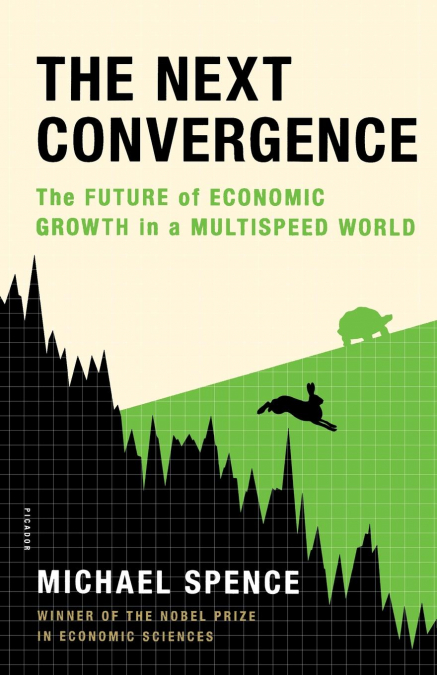
  • NEXT CONVERGENCE
    MICHAEL SPENCE
    ...
    Disponible

    17,21 €

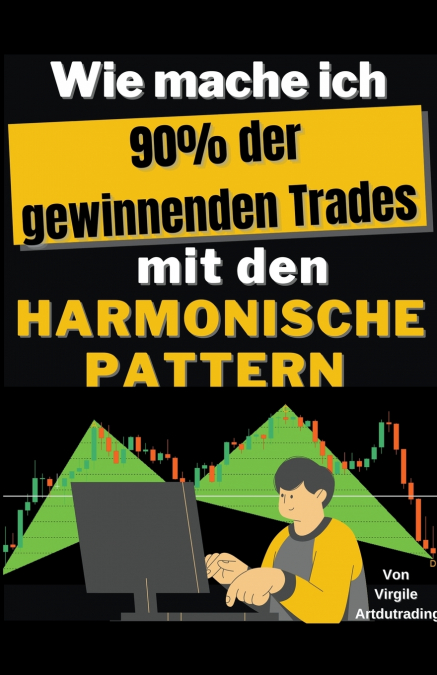
  • Wie mache ich 90% der gewonnenen Trades mit den harmonische pattern
    virgile artdutrading
    Haben Sie die Nase voll von ineffizienten Methoden im Devisenhandel? Harmonische Muster sind chartistische Patterns, mit denen Sie Kursbewegungen antizipieren und zum besten Zeitpunkt eine Position einnehmen können - mit Erfolgsquoten von 85 bis 90%.Wieder eine Traummethode? Nein, denn diese Patterns gibt es seit 70 Jahren und sie basieren auf Fibonacci-Ratios, bei denen sie me...
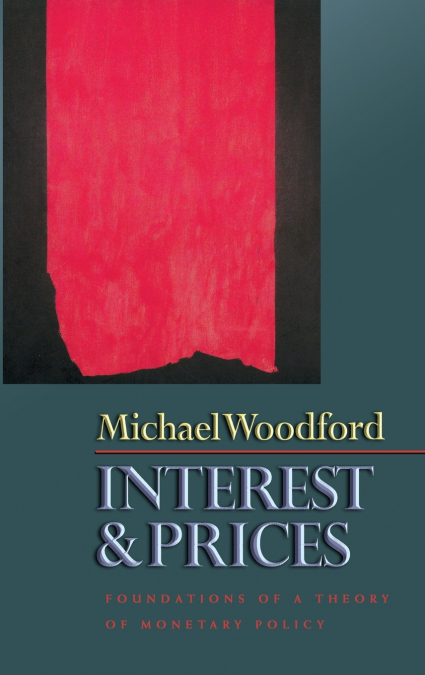
  • Interest and Prices
    Michael Woodford
    With the collapse of the Bretton Woods system, any pretense of a connection of the world’s currencies to any real commodity has been abandoned. Yet since the 1980s, most central banks have abandoned money-growth targets as practical guidelines for monetary policy as well. How then can pure 'fiat' currencies be managed so as to create confidence in the stability of national unit...
    Disponible

    161,40 €

Otros libros del autor

  • Utbildning i Demokrati för 2000-Talet
    Helen Osieja
    Utbildning i Demokrati för 2000-Talet tar upp de sociala och politiska problem som påverkar världens demokratier i nutiden. Demokratin äventyras i många länder i världen av olika skäl, såsom teknisk innovation, omfattande invandring och polarisering. Den allestädes närvaron och en överflöd av information har inte gjort världens medborgare mer toleranta- tvärtom. Människor tende...
    Disponible

    17,69 €

  • Educación para la Democracia en el Siglo XXI
    Helen Osieja
    La democracia en el siglo XXI se ha visto amenazada en diversas partes del mundo y de diferentes formas: La polarización política es una realidad de muchas democracias, así como la inmigración masiva de personas provenientes de sistemas autoritarios o totalitarios que no conocen los valores democráticos. La democracia, que significa 'gobierno del pueblo para el pueblo' se basa ...
    Disponible

    12,40 €

  • Economic Sanctions as an Instrument of U.S. Foreign Policy
    Helen Osieja
    The US trade embargo against Cuba is almost as old as the Cuban Revolution itself. It was imposed as an economic instrument with the aim of overthrowing the Castro regime. Nevertheless, the Castro regime has remained in power for over half a century. Motivated by political as well as economic interests, the trade embargo enhanced the Castro regime’s power, pushing it to the Sov...
  • Indigenous Educational Policies in Yucatán and Swedish Lapland
    Helen Osieja
    The book is a Master’s in Education dissertation on indigenous educational policies. It compares and contrasts Indigenous educational policies in Yucatán, Mexico and in Swedish Lapland and analyses to what degree their aims have been fulfilled in practice. ...
    Disponible

    13,95 €