Dr ant
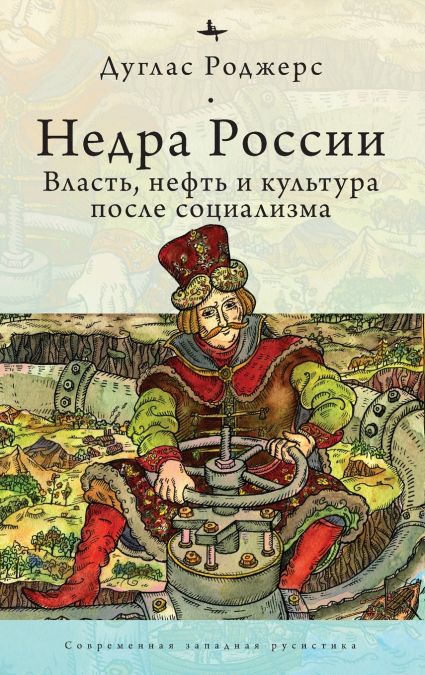
Russia has long been a threat to our national security. Shortly after the end of World WarII, tensions began to escalate between the United States and the Soviet Union (which wascentered around Russia, hence we will use the two names interchangeably). The Cold War was adifficult period during which conflicts occurred all over the world, as we and the Russiansinstalled and supported proxy governments and armies. There was a serious threat of nuclearwar, which was reduced thanks to the dialogue between Reagan and Gorbachev. The end of thecommunist regimes in Europe led to a favorable situation that brought optimism: the threat of afuture global war was over. Russia became our partner, even participating in some NATOtraining (the Partnership for Peace initiative).However, the Russians were not happy with this marginalized position. They were eagerto become a respected power again. Then Vladimir Putin appeared and began to pursue a policyof 'strong Russia.' Over time, he demonstrated his aim to restore the Soviet Union, but in theform of an expanded Russia that would have a strong influence in world affairs. The war inUkraine is the apotheosis of his plan, which was aimed at eliminating the unipolar world.Since the beginning of the war, the American media, politicians and academic circleshave been repeating that Russia is a serious threat and our task is to eliminate it. However, withDonald Trump’s coming to power, an alternative version has emerged - that we must come to anagreement with Russia and understand each other. We must show that our attitude is benevolentand that it is not aimed at destroying Russia as a state and as a nation. This book aims preciselyto show what our attitude should be toward today’s Russia, toward Putin’s Russia, and to analyze the possible prospects of this attitude. To this end, however, we will delve deeper into Russian culture and soul, focusing on Eastern Orthodoxy, Russian literature and the great Russianphilosophers. Hence, the book that the reader holds in their hands is not purely political in nature, but also contains historical, religious, philosophical and cultural dimensions. The present work consists of six chapters. The first one is a historical outline that tells the story of the Russian tsardom since the time of Ivan the Terrible. As it will be shown, the history of Russia after Ivan the Terrible is a history of opposition between conservative forces (who hold on to Russian tradition) and pro-European forces (who prefer to borrow practices and ideas from the West).