Inicio > Humanidades > Filosofía > Ética y filosofía moral > Desire, Practical Reason, and the Good
Desire, Practical Reason, and the Good

Desire, Practical Reason, and the Good

Sergio Tenenbaum

174,01 €
IVA incluido
Consulta disponibilidad
Editorial:
Oxford University Press
Año de edición:
2010
Materia
Ética y filosofía moral
ISBN:
9780195382440
Añadir a favoritos

Most philosophers working in moral psychology and practical reason think that either the notion of "good" or the notion of "desire" have central roles to play in our understanding of intentional explanations and practical reasoning. However, philosophers disagree sharply over how we are supposed to understand the notions of "desire" and "good," how these notions relate, and whether both play a significant and independent role in practical reason. In particular, the "Guise of the Good" thesis -- the view that desire (or perhaps intention, or intentional action) always aims at the good - has received renewed attention in the last twenty years. Can one have desire for things that the desirer does not perceive to be good in any, or form intentions to act in way that one does not deem to be good? Does the notion of good play any essential role in an account of deliberation or practical reason? Moreover, philosophers also disagree about the relevant notion of good. Is it a purely formal notion, or does it involve a substantive conception of the good? Is the primary notion, the notion of the good for a particular agent, or the notion of good simpliciter? Does the relevant notion of good make essential appeal to human nature, or would it in principle extend to all rational beings? While these questions are central in contemporary work in ethics, practical reason, and philosophy of action, they are not new; similar issues were discussed in the ancient period. This volume of essays aims to bring together "systematic" and more historically-oriented work on these issues.
Artículos relacionados

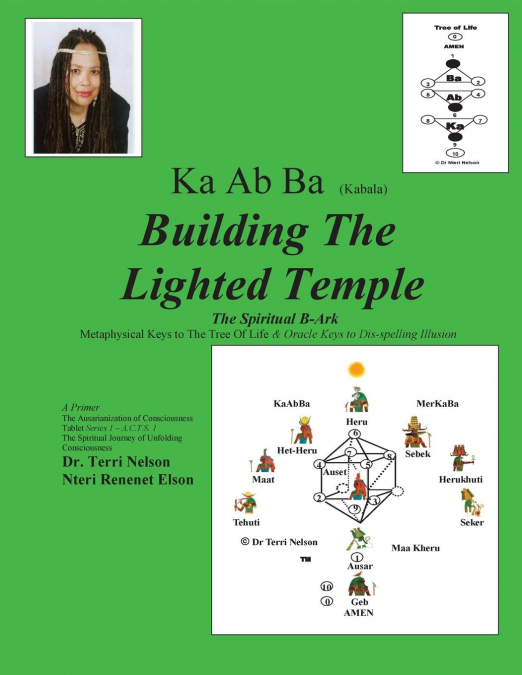
  • Ka Ab Ba Building The Lighted Temple
    Dr Terri R. Nelson / Dr Terri RNelson
    The book KaAbBa Building The Lighted Temple/Metaphysical Keys to the Tree of Life draws a circle that is inclusive of the Afrikan origin of the Ancient Kemetic/Egyptian wisdom. It reveals the undeniable root and link of Ancient Africa to all the religious systems that would develop worldwide. This book is explosive in its power to convey the meaning of KaAbBa, the Medu Neter  (...
    Disponible

    37,41 €

  • Technoethics and the Evolving Knowledge Society
    Rocci Luppicini
    Recently, there has been a major push to rediscover the ethical dimension of technology across the sciences, social sciences, and humanities. Technoethics and the Evolving Knowledge Society: Ethical Issues in Technological Design, Research, Development, and Innovation examines human processes and practices connected to technology embedded within social, political, and moral sph...
  • Kant
    Immanuel Kant
    Kant’s Groundwork of the Metaphysics of Morals is one of the most important works in modern moral philosophy. It belongs beside Plato, Aristotle, Machiavelli, and Hobbes. Here Kant sets out to articulate and defend the Categorical Imperative - the fundamental principle that underlies moral reasoning - and to lay the foundation for a comprehensive account of justice and human vi...
  • On the Duty of Civil Disobedience
    HENRY DAVID THOREAU
    Civil Disobedience argues that citizens should not permit their governments to overrule their consciences, and that they have a duty to avoid allowing their acquiescence to enable the government to make them the agents of injustice. Thoreau was motivated in part by his disgust with slavery and the Mexican-American War, but the sentiments he expresses here are just as pertinent ...
  • Beyond Good and Evil
    Friedrich Nietzsche
    Nietzsche, though primarily a philosopher, wrote widely on art, philology, history, religion, tragedy, culture, and science.  In 1886, at the height of his powers, he published Beyond Good and Evil.  Here he examines much of the best of human thought--dogmatic philosophy, Judeo-Christian morality, science and democracy – and finds it lacking.  Rejecting “slave-morality” he pres...
  • Beyond Good and Evil
    Friedrich Nietzsche
    Nietzsche, though primarily a philosopher, wrote widely on art, philology, history, religion, tragedy, culture, and science.  In 1886, at the height of his powers, he published Beyond Good and Evil.  Here he examines much of the best of human thought--dogmatic philosophy, Judeo-Christian morality, science and democracy – and finds it lacking.  Rejecting “slave-morality” he pres...
    Disponible

    9,99 €

Otros libros del autor

  • Rational Powers in Action
    Sergio Tenenbaum
    Human actions unfold over time, in pursuit of ends that are not fully specified in advance. Rational Powers in Action locates these features of the human condition at the heart of a new theory of instrumental rationality. Where many theories of rational agency focus on instantaneous choices between sharply defined outcomes, treating the temporally extended and partially open-en...
    Disponible

    32,80 €

  • Rational Powers in Action
    Sergio Tenenbaum
    Human actions unfold over time, in pursuit of ends that are not fully specified in advance. Rational Powers in Action locates these features of the human condition at the heart of a new theory of instrumental rationality. Where many theories of rational agency focus on instantaneous choices between sharply defined outcomes, treating the temporally extended and partially open-en...
  • Appearances of the Good
    Sergio Tenenbaum
    ...